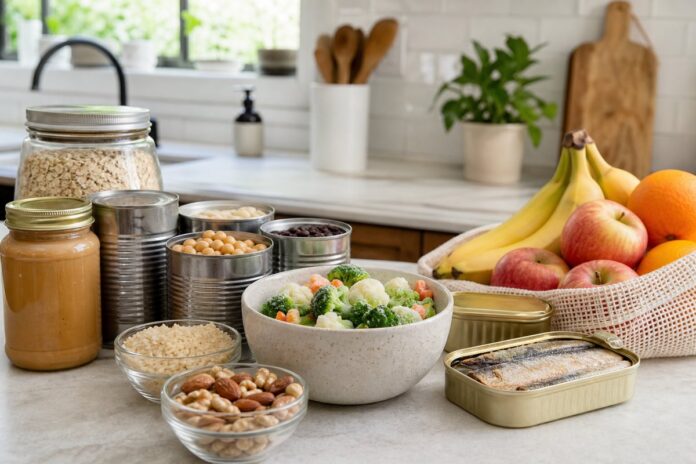
Healthy eating does not have to depend on buying everything fresh. According to the report, canned, frozen, and packaged foods can be a realistic and nutritious option for many people, especially when fresh produce is expensive, hard to keep on hand, or simply less convenient. Experts quoted in the piece note that these foods often last much longer, which can reduce waste and make it easier to keep fruits, vegetables, and protein sources available.
One of the simplest ways to shop more wisely is to look at the ingredient list. In general, fewer ingredients is often a good sign, and many products are made with just one or two whole-food items, such as canned peas, frozen fruit, or canned salmon. The report also notes that some packaged foods include added vitamins and minerals, so unfamiliar-sounding ingredients are not automatically a red flag. As one expert points out, processed does not always mean unhealthy.
What to watch for on the label
Sodium is one of the main things to check, especially with canned vegetables, soups, beans, and tinned fish. These foods can still be nutritious, but too much sodium can raise the risk of health problems over time. The report suggests looking for labels such as “No salt added,” “Low sodium,” or “No sodium” when possible. Canned beans, for example, are highlighted as a strong source of fiber, plant-based protein, iron, and zinc, making them a useful pantry staple when chosen carefully.
The overall message is straightforward: fresh food is great, but it is not the only path to a balanced diet. According to the report, canned, frozen, and packaged foods can absolutely belong in a healthy eating pattern, and people should not feel guilty if those items are what make it possible to put fruits and vegetables on the table.
Source: self.com