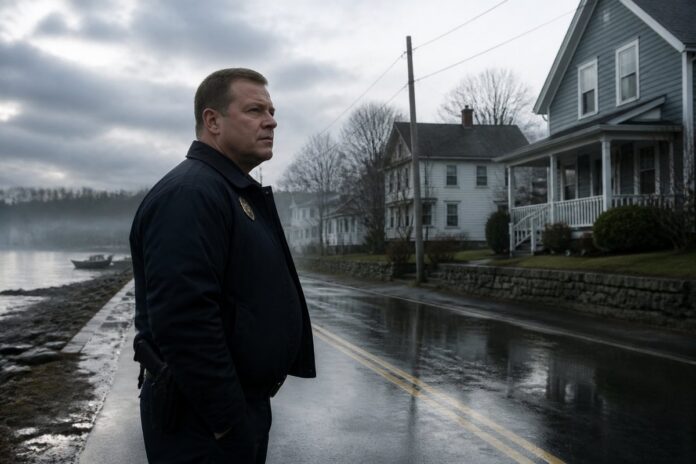
HBO’s The Leftovers began as a bleak adaptation of Tom Perrotta’s novel about the aftermath of a mysterious global disappearance, but the series ultimately became stronger once it stopped following the book so closely. According to the report, the first season recreated the novel’s events in full, while showrunner Damon Lindelof used the next two seasons to build on his own ideas.
The story is set largely in Mapleton, New York, where the “Sudden Departure” has left the community fractured and vulnerable to political and religious extremism. Justin Theroux plays police chief Kevin Garvey Jr., who is trying to hold the town together while dealing with his own emotional collapse after his wife Laurie, played by Amy Brenneman, joins the Guilty Remnant. Carrie Coon’s Nora Durst, who lost her entire family in the Departure, becomes an important part of Kevin’s life as the series moves forward.
What made the show stand out, according to the report, was Lindelof’s decision to shift the tone and expand the scope. Instead of staying locked in the novel’s relentless grief, the series moved ahead in time and explored how people live after collective trauma rather than only how they react to it. That approach allowed the cast and world to grow, with the Guilty Remnant becoming more complex through Ann Dowd’s Patti and the introduction of the Murphys in season 2, which added a clearer look at how grief and social burden are experienced differently.
The report also notes that the series found room for humor and surrealism in later seasons, including dreamlike sequences that eased the heaviness without undercutting the drama. By the end, The Leftovers had evolved into a more expansive and existential story about survival, connection, and the possibility of moving on, which is part of why it is remembered as one of HBO’s most distinctive sci-fi dramas.
Source: collider.com