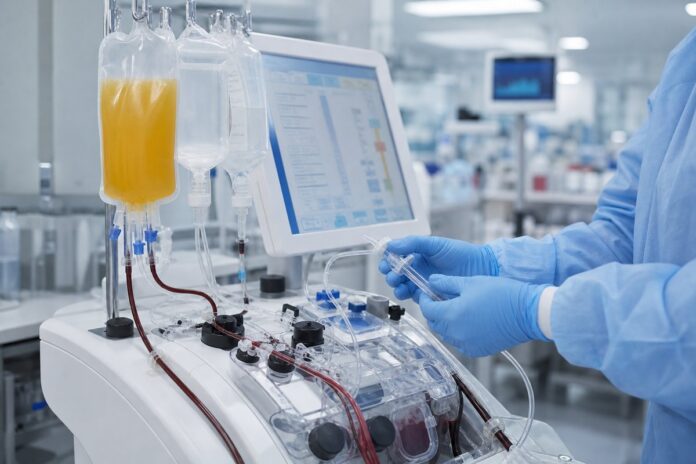
A new wave of interest around therapeutic plasma exchange has put aging research back in the spotlight. The procedure, which removes and replaces the liquid portion of blood, has been floated as a possible way to influence biological age. According to a 2025 study in Aging Cell, some participants appeared to become about 2.5 years younger at the molecular level. But researchers and longevity experts say that result should be viewed with caution, not as proof of a real anti-aging breakthrough.
Plasma matters because it carries far more than water. It contains proteins, metabolites, hormones, and inflammatory signals that help reflect what is happening throughout the body. That makes it useful for studying biological age, which is an estimate of how the body is functioning compared with a person’s actual age. Experts note that this measure is not exact, but it can still offer clues about long-term health risks. In general, people whose biological age is older than their chronological age tend to face higher risks for chronic illness and mortality, according to the report.
What the study did — and what it did not show
In the Aging Cell research, 42 people underwent plasma exchange with purified albumin and saline, and some also received IVIG, an immune therapy. Advanced lab tests were used to track aging-related changes in the body. The early numbers looked encouraging, but the effect was measured in the middle of the study rather than at the end. By the conclusion, the apparent age-reversal had largely disappeared. Experts said the body may initially respond to the replacement process, but then experience stress as it adjusts, which can push biomarkers back toward their original levels.
Researchers also pointed out that the intervention seemed to work better in less healthy participants, suggesting that any benefit may depend on who is receiving it. For now, experts describe the work as an early-stage study that shows the procedure can be done safely, but not one that justifies broad clinical use. They say larger and longer trials are needed before anyone can know whether plasma-based treatments can truly support healthier aging, and if so, for whom. At this point, the report suggests, the idea is promising but still very far from a general anti-aging solution.
Source: self.com