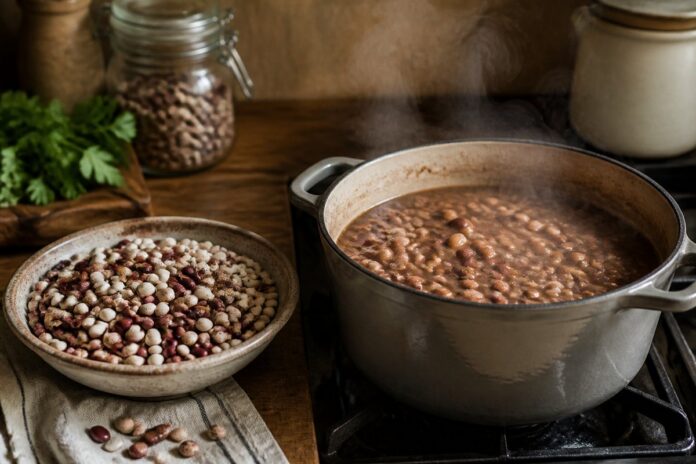
For anyone who has forgotten to put beans in water the night before, the good news is that dinner is not ruined. According to the report, soaking dried beans is helpful but not mandatory. It can make beans cook faster, soften their skins, and produce a creamier result, yet a good pot of beans is still possible without that step.
The need to soak depends largely on the beans themselves. Smaller, fresher beans from specialty growers or farmers market sources may be ready in about an hour or less, while larger beans and older supermarket bags are better candidates for soaking. For most beans, a soak of 6 to 8 hours is enough, and leaving them in water much longer can actually be counterproductive for very fresh beans. If the soak will run long, refrigeration is recommended.
Ways to cook dried beans
The report outlines three main approaches: an overnight or short soak, cooking them without soaking, or using a pressure cooker. Quick-soak methods are not especially encouraged, since it may be simpler to just begin cooking. A pressure cooker can speed the process and reduce the need for soaking, though it may leave the broth thinner, so some cooks finish by simmering the beans uncovered to concentrate the liquid.
Cooking time varies with bean size, age, and altitude, but soaking can reduce it by 25 percent or more. Smaller beans such as chickpeas or black-eyed peas may cook 30 to 40 minutes faster after soaking, while larger beans may see their time cut in half. Even so, the time spent soaking should be weighed against the time saved, and the beans should be checked for tenderness as they cook, with more boiling water added when needed.
Source: bonappetit.com