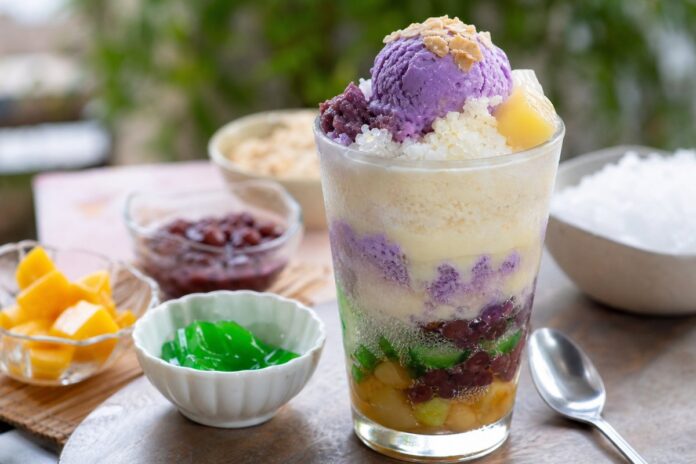
Halo-halo is a classic Filipino dessert built around finely shaved ice, sweetened condensed milk, and a colorful assortment of toppings that bring together creamy, chewy, crunchy, and cold elements in one glass. Its name translates to “mix-mix” in Tagalog, which reflects the way the dessert is traditionally eaten: everything is stirred together before the first spoonful.
The recipe notes that halo-halo can take many forms, depending on what is available or preferred. Common components found at carts and shops include jellies, flan, macapuno, palm seeds, sweetened red beans, ice cream, fresh fruit, toasted coconut, and pinipig, the crisp flakes of flattened glutinous rice. In this version, the dessert is built with homemade mango jelly, coconut leche flan, roasted sweet corn, sago pearls, pandan-infused condensed milk, and ube ice cream for a bright, layered presentation.
A flexible dessert with room for customization
One of halo-halo’s defining features is that there is no single fixed formula. The recipe encourages swapping in different fruits, jellies, beans, or store-bought toppings such as ube jam and prepared flan, depending on what is on hand. It also explains that many Filipino and pan-Asian grocery stores carry the more specialized ingredients, including macapuno, pinipig, sago pearls, palm seeds, and pandan condensed milk, though these items may be harder to find in standard American supermarkets.
Shaved ice is key to the dessert’s texture, and the recipe says that if an ice shaver is not available, finely crushed ice from a high-powered blender is the next best option. Once assembled, halo-halo is not meant to stay in neat layers for long; it is intended to be thoroughly mixed so the milk, ice, and toppings combine into a single icy, creamy dessert. The recipe yields four servings and is designed as a make-it-your-own treat that can be customized with friends or family.
Source: bonappetit.com