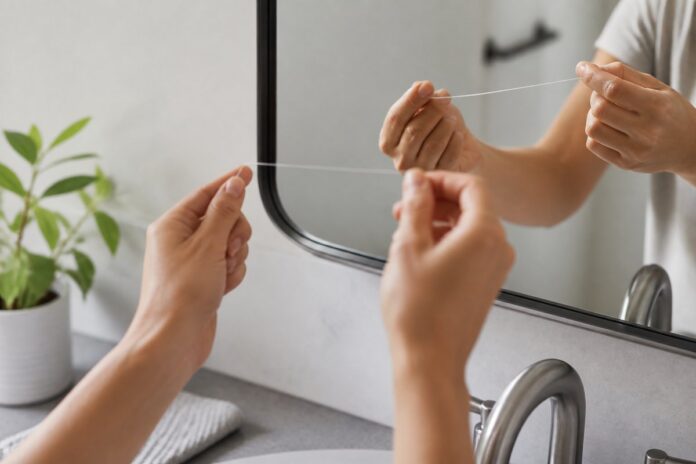
Flossing is often treated as a small add-on to brushing, but the report argues it may play a much bigger role in health and wellbeing than many people realize. Experts cited in the piece say a toothbrush only reaches about 60% of the tooth surface, leaving the spaces between teeth and along the gumline vulnerable to bacterial buildup. Because those areas are difficult to clean with brushing alone, flossing helps reduce plaque, lower bacterial load, and calm gum inflammation.
The article notes that this matters because gum disease is common, affecting about half of adults in the U.S. It also points to research associating regular flossing with a lower risk of dementia, Alzheimer’s disease, and stroke, as well as a role in diabetes management. On the other hand, poor flossing habits have been linked to higher cardiovascular risk and cardiovascular mortality. One study of more than 5,000 older adults found that never flossing was associated with a 30% higher mortality risk than flossing every day.
Experts quoted in the report connect these findings to bacteria that can begin in the mouth and contribute to inflammation elsewhere in the body. One such bacterium, Porphyromonas gingivalis, is linked to gum disease and has been found in atherosclerotic plaque and brain tissue in Alzheimer’s patients. The article emphasizes that these are associations rather than proven cause-and-effect relationships, but says they point to the importance of treating oral health as part of overall health.
For those building a routine, the report says flossing at night may be most useful, since it clears away biofilm before hours of sleep. It also says traditional string floss is more effective than picks or water flossers for reaching tight spaces and below the gumline, though alternatives are still better than skipping flossing altogether. The suggested technique is to wrap the floss in a C-shape around each tooth and move it up and down. In the end, the piece frames flossing as a small habit with possible benefits that extend well beyond the mouth.
Source: self.com