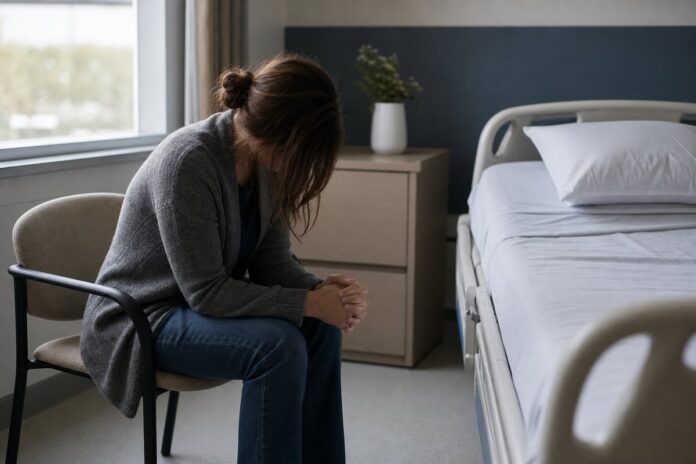
In a personal essay tied to Black Maternal Health Week, Mielle founder Monique Rodriguez says her experience losing her son Milan changed how she thinks about maternal health, grief, and the pressure placed on Black women to appear strong. Drawing on her background as a former labor and delivery nurse, she recalls recognizing that something felt wrong during her pregnancy and speaking up when the pain became sharp and persistent, only to feel that her concerns were not treated with the urgency they required.
Rodriguez says her pregnancy had already been considered high-risk because of a previous emergency C-section and the vertical incision on her uterus, which she understood could create danger in a later pregnancy. When she later experienced a uterine rupture, she says she was still navigating a system that did not respond as quickly or seriously as it should have. She uses that experience to raise a broader question: if someone with medical training and self-advocacy can still be failed, what happens to women with less information, fewer resources, or less confidence that they will be heard?
Beyond survival
According to the report, Rodriguez argues that the conversation around Black maternal health has to go beyond pregnancy-related deaths alone. She points to data showing that Black women are about three times more likely to die from pregnancy-related causes than white women, and that more than 80% of those deaths are considered preventable. Black infants also die at more than twice the rate of white infants. She also notes research showing that nearly 30% of Black women report mistreatment during maternity care, compared with about 20% of women overall, and says many women hold back from asking questions because they are worried about being dismissed.
Rodriguez says grief affected her marriage, motherhood, body, faith, and work, and that healing did not come from pretending to be unaffected. In her view, the expectation that Black women should remain “strong” through medical emergencies and loss can hide the real damage caused by bias, disrespect, and delayed care. She says Black Maternal Health Week should also make space for what comes after trauma: support for families, mental health care after miscarriage or stillbirth, and hospital systems that listen the first time. For her, the goal is not simply survival, but care that could have changed the outcome in the first place.
Source: self.com